Musato Technologies Blog – Page 62 of 74 – Musato Technologies
loader image

We enable business and digital transformation decisions through the delivery of cutting-edge ICT solutions and products...


Musato Technologies

Get inspired…


SaaS and recurring revenue model: Making the numbers work

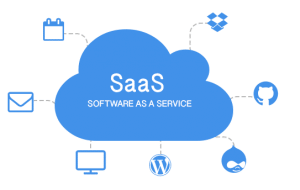
Software as a Service (SaaS) has become a popular way to deliver complicated and often expensive software solutions to a wider audience.SaaS

In the traditional software world, companies did most of their business via “perpetual” software licenses. This meant that customers purchased the software and the in-house hardware necessary to use the computer program. Although the customer owned the software in perpetuity, it could get very expensive and complex to deploy and maintain. In some cases, the costs and complexity of this system excluded small and mid-sized businesses from using certain software.

With SaaS, instead of purchasing the software outright, companies can effectively “rent” the software on a monthly, quarterly or annual basis—hence the term software as a service. The software is usually deployed on servers outside the organization and is accessed over the internet. The customer no longer has to worry about maintenance or hardware costs. Continue reading

The modern approach to choosing an ERP system

Today’s ERP System landscape offers more options than ever before. Here’s a look at how two companies took a strategic approach to choosing the right software for their needs.ERP system

The number of options that companies have when choosing an ERP system has changed in a big way. Just take Stratus Ventures Group, which invests in early-stage startups. When the company decided to deploy an ERP system that would be used to run three of its portfolio companies, it started with one overarching requirement: The software had to be cloud-based, and it could not be an Oracle or SAP product.

“They are slow-set in concrete,” Ofir Baharav, general manager of Stratus, said of the biggest names in legacy ERP. “You build them, and then you can’t really move much unless you have a sledgehammer.”

The changing definition of ERP

A seismic shift has occurred in the ERP landscape. The term ERP once evoked a years-long, multi-million dollar deployment followed by a 20-year commitment to an inflexible product and for good reason — that’s what an ERP implementation typically required. Yet that’s changing for companies both large and small. Today’s ERP can be whatever a company needs, from isolated pieces of back-office functionality to full-blown cloud-based suites tightly integrated with customer-management systems. Continue reading

MacOS security flaw grants admin access to anyone

The latest version of MacOS includes a mindlessly simple, one-step way to take over any Mac. What are we going to do with you? In your most recent High Sierra macOS release, it turns out you’ve given away to any local user to take over a Mac — lock, stock, and two smoking barrels.- MacOS security flawMacOS security flaw

Go over to your Mac running High Sierra and try this: Wake it up and go to your login screen. Now check “Other User” and entered root as the username and leave the password empty. You may very well find that you just logged into your system as the root user, that is the administrator. You now own that box.

That means if you stole a Mac, or just get physical access to one while the owner is away, you own all the data on it. Can you say bad? I knew you could.

This is an all-time security failure. I cannot think of anything to match it. All Macs running up-to-date macOS are wide-open for attacks.

This exploit doesn’t require any mad NSA-type hacker skills. If you can use a keyboard you can get in.

In the original version of this security hole it was found that all you had to do is go to System Preferences, then Users and Groups, and click the lock to make changes. Then, enter “root” as your username without a password. Shazam! You’re in. Continue reading

Cloud Computing Trends for 2018

Cloud computing trend remains a hot topic in the business world, and the trend is likely to continue according to Cisco’s latest Global Cloud index forecast, which covers 2013 through 2018. Cloud data centers, private cloud solutions,Cloud Computing Trend infrastructure as a service, as well as a platform as a service are all hot, thanks to the numerous advantages of cloud computing.

For this article, the purpose is to explore some of the major trends in cloud computing that you should prepare to adapt to your business in 2018.

Cloud as a Catalyst for Internet of Things (IoT)

The world has undergone a rapid transformation in the last few years as far as communication and business transactions are concerned. Today, people largely use mobile devices such as smartphones and tablets to access the internet, inquire about businesses, purchase items, and much more. That’s when IoT came into play, rising above the use of mobile devices to accomplish more tasks.

Gartner Research predicts the number of IoT devices in the world to be at least 20 billion by 2020. You know what that means? Continue reading

Ready for more secure authentication?

Try these password alternatives and enhancements

Password-only authentication is not effective. Combine passwords with multifactor authentication, social login, biometrics, or risk-based authentication to better protect users and your reputation.-Password alternativesPassword alternatives

The best thing you can say about using a password for authentication is that it’s better than nothing. High-profile breaches like Equifax, however, have exposed millions of passwords and user IDs, calling into question even that faint praise. If consumers don’t assume that at least some of their passwords have been compromised, they only create a dangerous false sense of security.

Companies that still rely on password authentication for access to important customer and corporate data are doing the same. Password-only protection is permanently broken, and any organization relying on it is placing its business and reputation at risk. Even if they avoid a breach, awareness of the shortcomings of password protection is much higher now thanks to Equifax. If that’s how you protect customers’ data, they will think twice about trusting you with it.

Alternatives like two-factor authentication (2FA), multifactor authentication (MFA), behavioral analytics, and biometrics have been available for some time, but adoption rates are low. The growing threat landscape and consumer awareness are lowering barriers to implementing these options — those barriers being, primarily, user resistance, complexity, and ROI. Continue reading

Options for scaling out SQL Server applications to boost workloads

Scaling out a database to meet the needs of a heavy processing workload can be a challenge. Here are details on the SQL Server scalability methods available to ease the process.- SQL Server applications SQL Server applications

One of the big challenges for SQL Server admins has always been scaling databases to accommodate heavier data processing workloads. Complicating matters, Microsoft provides many different SQL Server scalability options, but they aren’t all appropriate for every situation.

First, there’s the basic question of whether to scale up or scale out a SQL Server architecture. The former involves moving a database to a bigger server with more processors, memory and data storage; the latter extends SQL Server applications across multiple servers, which spreads out data processing workloads and offers potential data redundancy and availability benefits.

In this case, we’ll focus on the various ways to scale out SQL Server. Before deciding which scalability method to use, database administrators must consider factors such as the frequency of data updates, whether data can be partitioned between different databases and their ability to modify the applications that run on SQL Server. With the answers in hand, they can create a scale-out plan that meets their specific needs. Continue reading

With new apps and services, IT connects deskless workers to biz

Messaging apps and mobile services from companies like Zinc and Crew are springing up to help connect workers Appsnot bound to a desk with colleagues in the office.

Office-based employees have a wealth of software tools available to keep them connected with colleagues and the wider business. Even those working remotely can easily stay in touch with their team through email, enterprise social networks, and group messaging tools such as Slack.

That’s not always the case for deskless workers – the vast, yet the underserved chunk of the workforce that tends to fall outside the scope of IT, according to Stacey Epstein, CEO of enterprise messaging app vendor Zinc.

Zinc specifically targets employees in non-office-based roles. They could be anything from emergency workers to construction laborers, nurses, retail workers or service technicians – employees who usually own a smartphone but don’t routinely require access to core business applications.

“Deskless workers are doing their job by fixing something in the field or helping a customer at a hotel desk or a retail store, or if they are in healthcare they are seeing a patient,” said Epstein. “They are not sitting in front of a computer or an office where they can hop into a conference room or even have an impromptu team or group meeting.

“So these workers are inherently siloed from the people and the knowledge that help them do a good job,” she said.

Deskless workers have different technology requirements than typical office workers, said 451 Research senior analyst Raul Castañón-Martínez. They don’t use a computer as their main device to do their job and communications are often sent via text or consumer apps such as WhatsApp. Continue reading

You Need Web Hosting

If you own a business, you need to answer this important question: Does your company have a website? If it doesn’t, it ought to. Naturally, online businesses require websites for marketing and selling products or services by definition,Web Hosting but even local brick-and-mortar business needs to be discoverable via the web. Word of mouth only gets you so far in this internet-centric age. These days, people discover new businesses—even local business—via Bing, Google, and Yahoo, search engines that make it incredibly simple to find companies’ products, operational hours, and prices. If your business doesn’t appear in the search results, especially on the first page, it’ll be difficult for potential clients and customers to find you. In other words, no website, no money. You do not want that. Of course, web hosting isn’t just for businesses. You may want to host a personal website for many reasons.

Either way, the first step in building your online presence is finding a web host, the company that will store your website’s files on its servers and delivers them to your readers’ and customers’ browsers. Web hosting services offer varying amounts of monthly data transfers, storage, email, and other features. Even how you pay (month-to-month Continue reading

How low-code development makes building mobile apps easier

Low-code tools let nearly anyone build mobile applications quickly and efficiently. Here’s why these development tools will continue to grow in popularity.-Low-Code Development low-code development

A new category of mobile software developers is coming, and, surprise, they’re not actually developers. Thanks to a growing number of low-code development platforms, nearly anyone with some enthusiasm and patience can build mobile and web applications today. And they can do it quickly.

These new tools essentially do the hard work developers had to do — from data management and integration to visual configuration of business logic tools, built-in rules for development and delivery, and emphasis on drag-and-drop elements, according to the Forrester Research Wave report, “Low-Code Development Platforms, Q2 2017.” This is a way companies can “bring people into the development organization and rapidly drive innovation and compete with the unicorns,” said Robert Stroud, principal analyst for infrastructure and operations professionals at Forrester. With these new platforms, Stroud said so-called citizen developers are for the first time “really able to leverage IT.” Continue reading

Lean Software Development

Lean software development is a concept that emphasizes optimizing efficiency and minimizing waste in the development of software. This approach has its roots in the lean manufacturing movement of the 1980s but is now considered an integral part of the Agile software development methodology.Lean Software Development

Seven principles of lean software development

Lean principles center on the idea that less is more, and they aim to streamline every part of the software development lifecycle.

The concept is that efficiencies can be applied and waste can be managed at all levels: each individual, every department, interdepartmental operations, the organization as a whole, and the relationships of the organization with customers and suppliers.

When it comes to waste, the lean philosophy has a very broad definition that includes anything that doesn’t add value to the product. A lean product development team should focus on learning and, because of the strong demand for software applications today, should decide on features as late as possible to eliminate the need to redo work as the market changes. At the same time, there is equal pressure to deliver as fast as possible. Continue reading