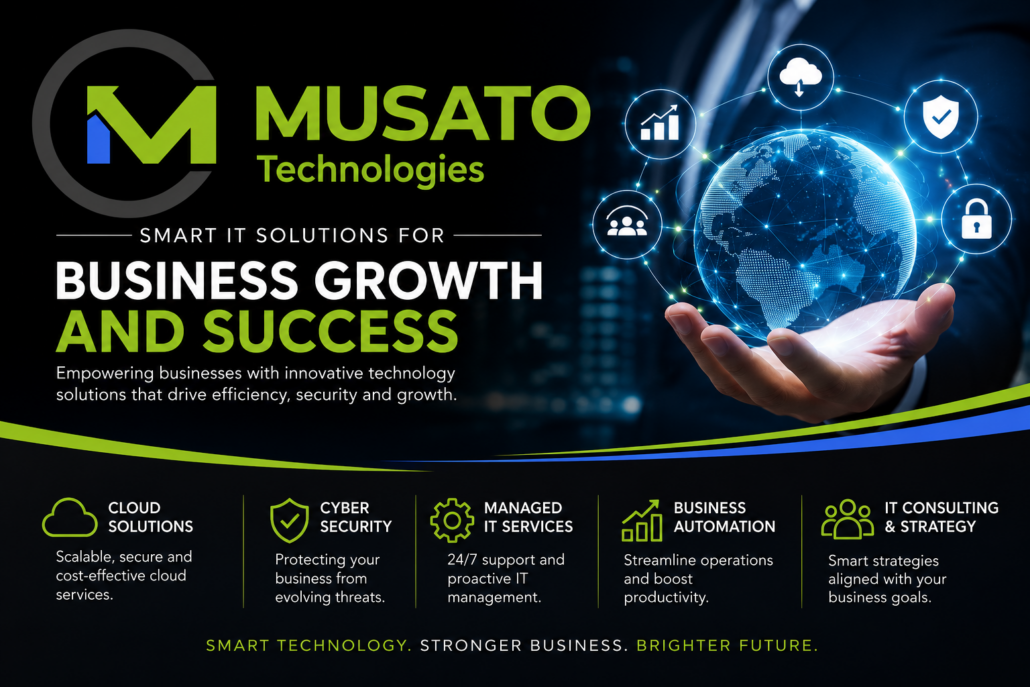
Smart IT Solutions for Business Growth and Success
In today’s rapidly evolving digital economy, smart IT solutions have become the driving force behind sustainable business growth, operational excellence, and long-term success. Organizations of every size depend on innovative technology to improve productivity, strengthen cybersecurity, enhance customer experiences, and gain a competitive advantage. By strategically implementing modern IT solutions, businesses can streamline operations, reduce costs, and create scalable infrastructures that support future expansion.
This comprehensive guide explores how smart IT solutions empower organizations to achieve measurable business success while adapting to changing market demands.
Why Smart IT Solutions Are Essential for Modern Businesses
Businesses operate in an environment where technology influences nearly every aspect of daily operations. From communication and collaboration to customer relationship management and financial reporting, IT has become the foundation of organizational performance.
Modern smart IT solutions help businesses:
- Increase operational efficiency
- Reduce manual processes
- Improve data security
- Enhance customer satisfaction
- Enable remote and hybrid work
- Support informed decision-making
- Scale operations efficiently
- Reduce operational costs
Organizations that invest in intelligent technology solutions position themselves for continuous innovation while minimizing risks associated with outdated systems.
Cloud Computing: The Foundation of Digital Transformation
Cloud computing has transformed the way businesses manage their IT infrastructure. Instead of relying on expensive on-premises hardware, organizations can leverage secure cloud platforms that offer flexibility, scalability, and cost savings.
Benefits of Cloud Solutions
Businesses gain numerous advantages through cloud adoption:
- Lower infrastructure costs
- Automatic software updates
- Improved collaboration
- Business continuity
- Secure remote access
- Scalable storage capacity
- Disaster recovery capabilities
Cloud services allow employees to securely access business applications and data from virtually anywhere, improving productivity and enabling modern work environments.
Cybersecurity Solutions That Protect Business Assets
As cyber threats become increasingly sophisticated, cybersecurity must remain a top priority for every organization.
A comprehensive cybersecurity strategy includes:
- Next-generation firewalls
- Endpoint protection
- Multi-factor authentication
- Network monitoring
- Email security
- Encryption technologies
- Regular vulnerability assessments
- Security awareness training
Businesses that proactively invest in cybersecurity significantly reduce the likelihood of ransomware attacks, phishing attempts, data breaches, and financial losses.
Managed IT Services for Continuous Business Performance
Many organizations choose managed IT services to reduce operational burdens while gaining access to experienced technology professionals.
Managed IT providers typically deliver:
- 24/7 system monitoring
- Help desk support
- Network maintenance
- Software management
- Backup and disaster recovery
- Cybersecurity management
- Cloud administration
- Infrastructure optimization
By outsourcing IT management, businesses can focus on their core objectives while ensuring their technology remains secure, reliable, and up to date.
Business Automation Improves Productivity
Automation eliminates repetitive manual tasks and allows employees to concentrate on higher-value activities.
Examples of business automation include:
- Invoice processing
- Customer onboarding
- Payroll management
- Inventory tracking
- Marketing campaigns
- Customer support workflows
- Sales pipeline management
- Document approvals
Automation improves consistency, reduces human error, accelerates response times, and enhances overall operational efficiency.
Data Analytics Drives Smarter Business Decisions
Modern organizations generate enormous volumes of business data every day. Smart IT solutions convert raw data into valuable insights that guide strategic planning.
Data analytics helps businesses:
- Understand customer behavior
- Monitor financial performance
- Forecast market trends
- Improve operational efficiency
- Measure employee productivity
- Identify new revenue opportunities
- Optimize inventory management
Real-time dashboards and business intelligence tools empower executives to make informed decisions based on accurate information rather than assumptions.
Artificial Intelligence Enhances Business Operations
Artificial Intelligence (AI) is transforming industries by enabling intelligent automation and predictive decision-making.
Businesses use AI for:
- Customer service chatbots
- Fraud detection
- Demand forecasting
- Sales recommendations
- Document processing
- Predictive maintenance
- Market analysis
- Personalized customer experiences
AI-powered systems continuously learn from business data, improving accuracy and operational performance over time.
Customer Relationship Management (CRM) Systems
Strong customer relationships are essential for sustainable growth.
A powerful CRM system enables organizations to:
- Manage customer interactions
- Track sales opportunities
- Automate follow-ups
- Improve customer service
- Generate detailed reports
- Segment customer databases
- Personalize marketing campaigns
Centralized customer information helps sales and support teams deliver exceptional experiences while increasing customer retention.
Enterprise Resource Planning (ERP) Solutions
ERP software integrates multiple business functions into a unified system.
Core ERP modules often include:
- Finance
- Human Resources
- Procurement
- Inventory Management
- Supply Chain
- Manufacturing
- Sales
- Customer Service
By centralizing information, ERP systems eliminate data silos and improve collaboration across departments.
Remote Work Technologies Increase Flexibility
Remote and hybrid work environments require secure, reliable technology.
Essential remote work solutions include:
- Virtual Private Networks (VPNs)
- Cloud collaboration platforms
- Video conferencing
- Secure file sharing
- Identity management
- Endpoint security
- Mobile device management
These technologies ensure employees remain productive regardless of location while maintaining high security standards.
Business Continuity and Disaster Recovery Planning
Unexpected disruptions can severely impact business operations.
Smart disaster recovery strategies include:
- Automated backups
- Cloud replication
- Emergency response plans
- Recovery testing
- High availability systems
- Failover infrastructure
Effective business continuity planning minimizes downtime and protects critical business data during emergencies.
Network Infrastructure Optimization
Reliable network infrastructure forms the backbone of every successful organization.
Modern networking solutions deliver:
- High-speed connectivity
- Wireless optimization
- Network segmentation
- Load balancing
- Traffic monitoring
- Performance optimization
- Secure remote access
Optimized networks support growing digital workloads while maintaining exceptional performance.
IT Consulting for Strategic Business Growth
Technology investments should align with long-term business objectives.
Professional IT consulting helps organizations:
- Develop digital transformation strategies
- Assess existing infrastructure
- Identify technology gaps
- Reduce operational costs
- Improve system performance
- Plan future technology investments
- Implement scalable solutions
Strategic planning ensures technology supports business growth instead of creating unnecessary complexity.
Benefits of Digital Transformation
Digital transformation delivers measurable improvements across every department.
Key benefits include:
- Improved efficiency
- Enhanced customer experiences
- Reduced operational expenses
- Greater business agility
- Faster innovation
- Higher employee productivity
- Better regulatory compliance
- Increased profitability
Organizations embracing digital transformation remain competitive in rapidly changing markets.
Scalable IT Infrastructure for Future Growth
Growing businesses require technology that expands alongside their operations.
Scalable infrastructure provides:
- Flexible computing resources
- Expandable cloud storage
- Modular software solutions
- Improved system performance
- Simplified upgrades
- Reduced downtime
- Cost-effective expansion
Scalable IT ensures businesses can respond quickly to new opportunities without significant infrastructure investments.
How Smart IT Solutions Improve Customer Experience
Customer expectations continue to evolve. Smart technologies help businesses deliver faster, more personalized, and more reliable services.
Examples include:
- AI-powered support
- Omnichannel communication
- Self-service portals
- Real-time order tracking
- Personalized recommendations
- Automated customer notifications
Superior customer experiences strengthen brand loyalty and encourage long-term relationships.
Reducing Operational Costs Through Technology
Technology investments often generate significant long-term savings.
Businesses reduce costs by:
- Automating repetitive processes
- Reducing hardware expenses through cloud adoption
- Lowering maintenance costs
- Minimizing downtime
- Improving energy efficiency
- Optimizing workforce productivity
These savings can be reinvested into innovation and business expansion.
Emerging Technology Trends Shaping the Future
Forward-thinking organizations continue to adopt emerging technologies such as:
- Artificial Intelligence
- Machine Learning
- Internet of Things (IoT)
- Edge Computing
- Blockchain
- 5G Connectivity
- Robotic Process Automation (RPA)
- Predictive Analytics
These technologies create new opportunities for efficiency, innovation, and competitive differentiation.
Choosing the Right IT Partner
Selecting the right technology partner is critical for long-term success.
An ideal IT partner should provide:
- Industry expertise
- Proven technical capabilities
- Responsive customer support
- Scalable technology solutions
- Strong cybersecurity practices
- Transparent communication
- Strategic guidance
- Continuous innovation
A trusted technology partner helps businesses maximize return on investment while adapting to evolving technological landscapes.
Conclusion
Smart IT solutions are no longer optional—they are fundamental to achieving sustainable business growth and success. By integrating cloud computing, cybersecurity, automation, artificial intelligence, business analytics, managed IT services, and scalable infrastructure, organizations create resilient operations capable of meeting today’s challenges and tomorrow’s opportunities.
Businesses that embrace intelligent technology strategies benefit from improved productivity, enhanced security, streamlined workflows, superior customer experiences, and stronger financial performance. Investing in smart IT solutions empowers organizations to innovate confidently, adapt rapidly, and build a future-ready enterprise that thrives in an increasingly digital world.