Close
We enable business and digital transformation decisions through the delivery of cutting-edge ICT solutions and products...
In today’s digitally-driven economy, seamless IT hardware and system integration form the backbone of organizational success. Companies across industries are increasingly relying on integrated technology ecosystems that streamline operations, enhance productivity, and drive innovation. At Musato Technologies, we specialize in delivering cutting-edge IT infrastructure solutions and system integration services that empower businesses to operate efficiently and scale sustainably.
IT hardware and system integration refers to the process of connecting various hardware components, software systems, and network infrastructures into one cohesive framework that functions as a unified system. This integration ensures that different technologies communicate effectively, share data securely, and work toward achieving common business objectives.
Organizations today deploy a wide range of devices and platforms—servers, routers, storage systems, computers, cloud platforms, and enterprise applications. Without a unified integration strategy, these systems can operate in silos, leading to inefficiencies, data fragmentation, and security vulnerabilities.
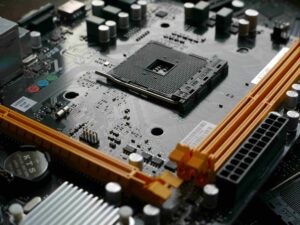
Hardware infrastructure serves as the foundation upon which digital ecosystems are built. From servers and workstations to networking equipment and data centers, the right hardware ensures speed, reliability, and security.
Modern enterprises rely on high-performance servers and scalable storage systems to host applications, store critical business data, and ensure uptime. With the rise of hybrid and multi-cloud architectures, businesses can now combine on-premises servers with cloud storage for enhanced flexibility and cost-efficiency.
Reliable network infrastructure is crucial for maintaining uninterrupted connectivity across departments, remote sites, and cloud platforms. This includes switches, routers, firewalls, and access points, all working together to create a robust and secure communication backbone.
From desktop PCs and laptops to mobile devices and IoT endpoints, end-user hardware enables employees to interact with enterprise systems. Ensuring consistency, compatibility, and security across these devices is key to productivity and compliance.
System integration is the process of combining diverse IT systems and software applications—both legacy and modern—into a unified environment. It enables seamless communication between disparate technologies, ensuring data consistency and improving operational efficiency.
With system integration, various technologies—ERP, CRM, HRM, and SCM systems—can work together smoothly. This allows businesses to streamline workflows, minimize redundancy, and gain a comprehensive view of their operations.
Integrated systems eliminate the problem of data silos, allowing organizations to collect, process, and analyze information from multiple sources in real time. This improves decision-making and supports predictive analytics, which can forecast trends and drive strategic planning.
By integrating business systems, repetitive manual tasks can be automated. For example, when a new order is processed in an ERP system, it automatically triggers inventory updates, invoicing, and logistics operations across other platforms—saving time and reducing human error.
An integrated IT infrastructure enables businesses to scale up quickly as operational needs grow. Performance bottlenecks are minimized, and system resources are optimized to deliver consistent results.
By integrating systems, organizations reduce maintenance costs, avoid redundant hardware purchases, and eliminate licensing overlaps. Centralized management also leads to lower administrative overheads.
Modern integration solutions include advanced cybersecurity protocols, such as encryption, access controls, and continuous monitoring. Businesses can ensure compliance with regulatory frameworks like GDPR, POPIA, or ISO/IEC 27001.
An integrated infrastructure supports reliable backup and disaster recovery mechanisms. In case of system failures, data can be restored quickly, minimizing downtime and ensuring business continuity.
At Musato Technologies, our approach to IT hardware and system integration follows a structured, end-to-end methodology designed to deliver measurable results.
We begin with a comprehensive assessment of your current infrastructure, business objectives, and technical requirements. This helps us identify performance gaps and integration opportunities.
Our engineers design a custom integration architecture that ensures optimal compatibility between hardware, applications, and network systems. The design focuses on scalability, performance, and security.
We provide enterprise-grade IT hardware from trusted global brands, ensuring durability and long-term reliability. Our deployment strategy minimizes disruptions while ensuring seamless transition from legacy systems.
Through advanced APIs, middleware, and automation tools, we integrate all components—servers, software, and networks—into a single, cohesive ecosystem.
Rigorous testing guarantees that every component functions as intended. We validate system performance, security compliance, and interoperability before full rollout.
We offer 24/7 technical support, system monitoring, and proactive maintenance to ensure continuous optimization and reliability.
With increasing adoption of cloud platforms, businesses are integrating on-premises systems with cloud-based environments for flexibility, scalability, and cost control.
Organizations are leveraging edge computing hardware to process data closer to the source, reducing latency and improving response times for IoT applications and real-time analytics.
Artificial Intelligence (AI) and Machine Learning (ML) are being used to automate system monitoring, detect anomalies, and predict potential failures before they occur.
SDI allows companies to manage their hardware through software control layers, enabling rapid configuration changes and improving overall agility.
At Musato Technologies, we are committed to delivering end-to-end IT solutions that align with our clients’ business goals. Our expertise spans multiple domains, including network architecture, enterprise systems, data center infrastructure, and cloud integration.
We provide:
Our track record in delivering high-performance, secure, and reliable infrastructures has made us a trusted partner for businesses across South Africa and beyond.
In an era defined by digital transformation, effective IT hardware and system integration is no longer optional—it is a strategic necessity. Businesses that invest in integrated, future-proof infrastructure gain a decisive advantage in efficiency, scalability, and competitiveness.
At Musato Technologies, we bridge the gap between complex technologies and business performance. Our integration solutions are designed to empower organizations to thrive in an increasingly connected world.

Gideon Ebonde M. is the CEO and Chief Software Architect at Musato Technologies. He is experienced Software developer with a demonstrated history of working in the information technology and services industry. He has a strong engineering professional skilled in Mobile Application Development, Enterprise Software, AI, Robotics, IoT, Servers, Cloud and business application. He is an accomplished DevOps software engineer and a visionary computer scientist and engineer.
Leave a Reply
You must be logged in to post a comment.