
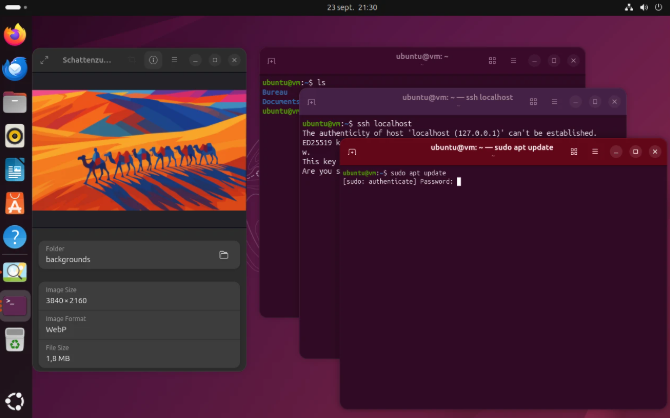
Linux Operating Systems for Cloud Deployments
Enterprise-Grade Linux Foundations for Modern Cloud Infrastructure
In today’s distributed computing landscape, we rely on Linux operating systems as the dominant foundation for cloud deployments, virtualized environments, and containerized workloads. Linux delivers stability, security, scalability, and performance optimization that align precisely with the demands of public cloud, private cloud, and hybrid cloud architectures. Our cloud infrastructure strategies are built on hardened Linux distributions that enable seamless orchestration, automation, and workload portability across environments.
Linux is not merely an operating system; it is the core control layer that governs compute, networking, storage abstraction, and application runtime behavior in cloud ecosystems. Its modular architecture, kernel tunability, and open standards support make it the preferred platform for IaaS, PaaS, and cloud-native application frameworks.
Why Linux Dominates Cloud Computing Environments
We deploy Linux because it provides unmatched kernel-level efficiency, enabling higher virtual machine density and reduced resource overhead. Its lightweight architecture allows optimal utilization of CPU cycles, memory allocation, and I/O throughput, which is critical in large-scale cloud clusters.
Key advantages include:
- Advanced process scheduling for high-performance workloads
- Built-in network stack optimization for cloud networking
- Superior container compatibility with Docker and Kubernetes
- Security-focused design with SELinux and AppArmor
- Rapid patching and update cycles
- Automation readiness for DevOps pipelines
Linux environments integrate seamlessly with cloud orchestration tools, ensuring that infrastructure remains programmable, repeatable, and resilient under dynamic load conditions.
Best Linux Distributions for Cloud Deployments
Ubuntu Server for Cloud Workloads
We implement Ubuntu Server in cloud infrastructures requiring broad ecosystem compatibility. It offers:
- Optimized images for AWS, Azure, and Google Cloud
- Strong Kubernetes and container orchestration support
- Long-Term Support (LTS) releases for stability
- Automated security updates
Ubuntu excels in microservices architectures, CI/CD environments, and cloud-native application hosting.
Red Hat Enterprise Linux (RHEL) for Enterprise Clouds
RHEL provides enterprise-grade reliability and certified compatibility with mission-critical platforms. We use RHEL in regulated industries where compliance and support lifecycles are essential.
Core strengths:
- Certified cloud provider integrations
- Predictable release lifecycle
- Advanced security controls
- High-availability clustering
RHEL forms the backbone of many enterprise private clouds and OpenStack environments.
CentOS Stream and Rocky Linux
For cost-efficient enterprise alternatives, we deploy Rocky Linux or CentOS Stream, which maintain binary compatibility with RHEL while enabling flexibility in infrastructure design.
These distributions support:
- Virtualization hosts
- Database clusters
- Application servers
- Dev/test cloud platforms
Debian for Stability-Centric Cloud Systems
Debian Linux is ideal where long-term stability outweighs cutting-edge features. Its minimalism and reliability suit:
- Backend service nodes
- Infrastructure controllers
- Secure internal cloud services
Linux in Cloud Virtualization
Linux powers the hypervisors that run cloud infrastructures. We leverage:
- KVM (Kernel-based Virtual Machine) for high-performance virtualization
- QEMU for hardware emulation
- libvirt for VM lifecycle management
This stack ensures efficient VM provisioning, live migration, and resource isolation across multi-tenant environments.
Linux-based hypervisors enable:
- Elastic scaling of virtual instances
- Workload segmentation
- Performance isolation
- Infrastructure redundancy
Linux for Containerized Cloud Platforms
Cloud computing increasingly relies on container technology, and Linux provides native support through:
- cgroups for resource control
- namespaces for process isolation
- OverlayFS for layered container storage
We build container platforms on Linux to enable:
- Kubernetes cluster management
- Rapid application deployment
- Immutable infrastructure models
- Microservices scalability
Linux kernels optimized for containers ensure low latency, high throughput, and minimal overhead.
Security Hardening in Linux Cloud Systems
Security in cloud environments begins at the OS layer. Linux offers granular security frameworks, including:
- SELinux mandatory access controls
- AppArmor confinement profiles
- Kernel auditing subsystems
- FirewallD and iptables
We implement automated patch management, intrusion detection, and system logging to maintain a hardened posture across cloud nodes. Linux enables:
- Role-based access control
- Secure SSH configurations
- Disk encryption
- Secure boot mechanisms
Automation and DevOps Integration
Linux systems are built for automation. We use:
- Ansible for configuration management
- Terraform for infrastructure provisioning
- Bash and Python scripting for system control
- CI/CD pipelines integrated with Linux servers
Cloud-native environments depend on repeatable, version-controlled infrastructure. Linux enables infrastructure as code, ensuring consistent deployments across staging and production environments.
Performance Optimization for Cloud Linux Systems
To maximize efficiency, we tune Linux for cloud workloads through:
- Kernel parameter optimization
- Memory overcommit configuration
- Network buffer tuning
- Disk I/O scheduler selection
These optimizations improve:
- Database response times
- Application throughput
- Virtual machine performance
- API latency
Linux’s configurability ensures systems remain optimized for high-traffic, data-intensive, and real-time processing environments.
Linux Networking in Cloud Architectures
Linux networking capabilities support advanced cloud topologies, including:
- Virtual bridges
- Software-defined networking
- VLAN segmentation
- Load balancing
We deploy Linux to manage cloud routing, firewall policies, and secure service exposure. Its support for Open vSwitch, IP forwarding, and network namespaces makes it indispensable in multi-layer cloud architectures.
Scalability and High Availability
Linux ensures resilient cloud operations through:
- Clustering frameworks
- Failover mechanisms
- Replication services
- Distributed file systems
We build highly available infrastructures where Linux nodes automatically rebalance workloads during hardware or network failures.
Linux Storage Management for Cloud Systems
Cloud storage relies on Linux to manage:
- Logical Volume Management (LVM)
- RAID configurations
- Distributed storage clusters
- Network file systems
Linux storage layers provide high-speed, redundant, and scalable data access across compute clusters.
Future-Proof Cloud Infrastructure with Linux
Linux continues to evolve with:
- Edge computing integration
- AI workload optimization
- Cloud-native security frameworks
- Serverless runtime support
We rely on Linux to power next-generation cloud platforms that demand adaptability, automation, and performance at scale. Contact Musato Technologies to learn more about how Musato Technologies can help with the implementation of linux operating systems to support your business growth and digital transformation.