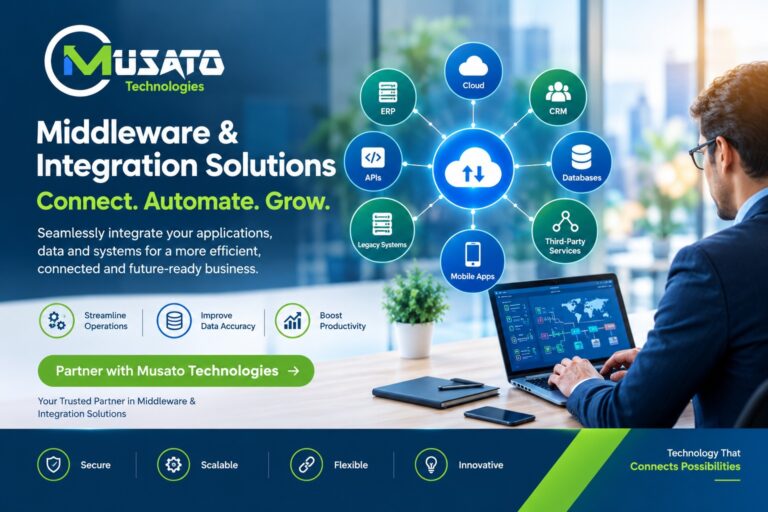

ICT Solutions Adoption and Implementation: A Strategic Guide for Digital Transformation
Introduction to ICT Solutions Adoption and Implementation
ICT solutions adoption and implementation has become a central component of modern organizational strategy. As businesses, government institutions, educational organizations, healthcare providers, and nonprofit entities increasingly depend on digital technologies, selecting and implementing the right information and communication technology solutions can directly influence operational efficiency, service delivery, security, collaboration, and long-term competitiveness.
We approach ICT adoption as more than simply purchasing software, hardware, connectivity, or cloud services. Successful implementation requires us to align technology with organizational objectives, existing processes, employee capabilities, information security requirements, budgets, and future growth. A technically sophisticated solution can deliver limited value if it does not address a genuine business requirement or if users are unable or unwilling to adopt it.
A structured approach therefore enables us to move from identifying a technological need to selecting an appropriate solution, implementing it effectively, measuring its performance, and continuously improving its contribution to organizational objectives.
What Is ICT Solutions Adoption and Implementation?
ICT solutions adoption refers to the process through which an organization evaluates, selects, accepts, and begins using information and communication technologies. These technologies can include enterprise software, cloud computing platforms, communication systems, cybersecurity tools, data-management platforms, networking infrastructure, collaboration applications, artificial intelligence solutions, and digital customer-service systems.
ICT implementation is the practical process of introducing the selected technology into the organization. It can involve system configuration, infrastructure deployment, data migration, integration, testing, user training, cybersecurity controls, process redesign, technical support, and performance monitoring.
Adoption and implementation are closely connected but should not be treated as identical. Implementation can technically be completed while adoption remains weak. For example, an organization may deploy a new enterprise platform successfully, yet employees may continue relying on spreadsheets, email, or legacy applications. In such circumstances, the organization has implemented technology without achieving effective technology adoption.
We therefore focus on both dimensions:
- Technology selection
- Business-process alignment
- Infrastructure readiness
- User adoption
- Change management
- Cybersecurity
- Data governance
- Integration
- Training and support
- Performance measurement
- Continuous improvement
Assessing Organizational ICT Requirements
Before adopting an ICT solution, we begin with a detailed assessment of organizational requirements. This stage helps us distinguish between genuine technology requirements and problems that may instead be caused by inefficient processes, inadequate governance, insufficient training, or unclear responsibilities.
We assess the organization’s current technology environment, including hardware, software, networks, cloud services, databases, communication systems, security controls, and existing technology contracts. We also examine how employees currently complete critical business processes.
A comprehensive ICT assessment considers questions such as:
- Which business processes are inefficient?
- Where are manual activities creating unnecessary costs or delays?
- Which systems contain critical organizational data?
- Are existing applications integrated?
- What cybersecurity risks exist?
- Which technology assets require replacement or modernization?
- What skills are available internally?
- What technology capabilities will be required in the future?
- Which regulatory or compliance obligations apply?
- What level of investment can the organization sustain?
The answers provide a foundation for creating an ICT adoption and implementation strategy that reflects actual organizational priorities.
Developing an ICT Strategy and Roadmap
Once requirements have been identified, we develop a technology roadmap that connects ICT investments with measurable organizational objectives.
A strong roadmap should establish priorities rather than attempting to implement every desirable technology simultaneously. We can categorize initiatives according to business impact, urgency, complexity, risk, cost, and organizational readiness.
For example, an ICT roadmap may include:
- Infrastructure modernization
- Cloud migration
- Cybersecurity improvements
- Enterprise application implementation
- Data management and analytics
- Digital communication platforms
- Workflow automation
- Customer or citizen-facing digital services
- Artificial intelligence initiatives
- Employee productivity and collaboration tools
We also establish implementation phases. A phased approach allows us to identify problems early, manage financial commitments, reduce disruption, and incorporate lessons from initial deployments into subsequent projects.
Selecting the Right ICT Solution
Technology selection is one of the most important stages in ICT adoption. We evaluate potential solutions against clearly defined technical, operational, financial, and strategic requirements.
A suitable ICT solution should not simply offer an impressive collection of features. It should address specific organizational needs while remaining practical to operate and maintain.
We typically evaluate:
Functionality
The solution must provide the capabilities required by the organization. We distinguish essential requirements from desirable features so that purchasing decisions remain focused.
Integration
The ability to integrate with existing systems is critical. Poor integration can create duplicate data, manual workarounds, inconsistent records, and additional operational costs.
Scalability
We assess whether the solution can accommodate organizational growth, increased transaction volumes, additional users, new locations, and evolving requirements.
Security
Security considerations include identity management, authentication, authorization, encryption, monitoring, vulnerability management, backup, disaster recovery, and incident response.
Total Cost of Ownership
We consider more than the initial purchase price. Total cost can include licensing, implementation, customization, infrastructure, migration, training, support, upgrades, maintenance, and eventual replacement.
Vendor Capability
We evaluate vendor stability, technical support, service-level commitments, implementation experience, product development, documentation, and contractual terms.
ICT Implementation Planning
Effective ICT implementation begins with a detailed project plan. We establish responsibilities, milestones, dependencies, risks, budgets, resources, communication requirements, and acceptance criteria.
A typical implementation lifecycle includes:
Planning → Design → Configuration → Integration → Data Migration → Testing → Training → Deployment → Support → Optimization
The implementation team should include both technical and business stakeholders. IT teams can provide technical expertise, while operational users understand how the system must function in real-world environments.
Clear governance is particularly important for large ICT projects. We establish decision-making responsibilities, escalation procedures, project reporting mechanisms, and processes for handling scope changes.
Data Migration and Integration
Data is often one of the most challenging components of ICT implementation. Existing organizational data may be stored across multiple systems, spreadsheets, databases, applications, and physical records.
Before migration, we assess data quality and determine which information should be transferred. This process can involve:
- Data cleansing
- Duplicate identification
- Data standardization
- Field mapping
- Data validation
- Archiving
- Transformation
- Migration testing
- Reconciliation
We avoid treating data migration as a simple technical exercise. Poor-quality information transferred into a new platform can undermine confidence in the entire system.
Integration is equally important. Where multiple systems need to exchange information, we establish reliable interfaces and define ownership of critical data. Proper integration can reduce duplicate data entry and improve organizational visibility.
Cybersecurity in ICT Adoption
Cybersecurity must be integrated into ICT implementation from the beginning rather than added after deployment.
Every new system can introduce new security considerations. We therefore assess the technology’s authentication mechanisms, access controls, encryption, logging, vulnerability exposure, third-party dependencies, and data-handling practices.
We apply the principle of least privilege so that users receive only the access necessary for their responsibilities. Multi-factor authentication, secure configuration, endpoint protection, network controls, backups, monitoring, and incident-response procedures can further strengthen the environment.
We also consider the security implications of cloud platforms, remote work, mobile devices, third-party integrations, and external service providers.
A comprehensive ICT implementation should establish clear procedures for identifying, reporting, investigating, and responding to security incidents.
Change Management and User Adoption
Technology adoption ultimately depends on people. Even the most capable ICT platform can fail to produce its intended benefits if users do not understand it, trust it, or see its relevance to their work.
We therefore incorporate change management into the implementation strategy.
Effective change management includes:
- Stakeholder engagement
- Leadership communication
- User consultation
- Training
- Demonstrations
- Documentation
- Feedback mechanisms
- Super-user programs
- Technical support
- Post-implementation assistance
We communicate the practical benefits of the new system and explain how workflows will change. Users should have opportunities to raise concerns and identify operational issues before full deployment.
Training should also be role-specific. Employees should learn the functions relevant to their responsibilities rather than receiving large amounts of generic technical information.
Training and ICT Capacity Building
Long-term ICT success requires sustainable internal capability. We therefore treat training as an ongoing process rather than a single event immediately before launch.
Training can include classroom sessions, workshops, online learning, demonstrations, user guides, videos, knowledge bases, and supervised practical exercises.
We can also establish internal ICT champions who provide first-level support to colleagues and help communicate recurring issues to the technical team.
Continuous professional development becomes particularly important as technologies evolve. Cloud platforms, cybersecurity threats, artificial intelligence, data analytics, and collaboration technologies can change rapidly, requiring organizations to continually update their capabilities.
Measuring ICT Implementation Success
ICT implementation should be evaluated using measurable performance indicators. Successful deployment is not defined simply by whether a system has gone live.
We can measure:
- User adoption rates
- System availability
- Processing times
- Error rates
- Operational costs
- Employee productivity
- Customer-service performance
- Security incidents
- Support-ticket volumes
- Training completion
- User satisfaction
- Return on technology investment
For example, if an organization introduces workflow automation to reduce manual processing, we should measure processing time before and after implementation. This provides evidence of whether the investment has produced the intended operational improvement.
Managing ICT Implementation Risks
ICT projects can encounter technical, financial, operational, organizational, and security risks.
Common risks include:
- Inadequate requirements
- Unclear project ownership
- Budget overruns
- Implementation delays
- Poor data quality
- Integration failures
- Cybersecurity vulnerabilities
- Insufficient user training
- Vendor dependency
- Resistance to change
- Inadequate technical support
- Poor scalability
We manage these risks through structured risk registers, regular project reviews, testing, contingency planning, clear contracts, security assessments, and appropriate governance.
Pilot implementations can also reduce risk. Instead of deploying a new system across an entire organization immediately, we can test it within a controlled environment, resolve identified problems, and then expand deployment.
Cloud Computing and ICT Modernization
Cloud computing has significantly changed how organizations implement ICT solutions. Instead of maintaining all technology infrastructure internally, organizations can use cloud-based infrastructure, software, storage, databases, communication platforms, and analytics services.
Cloud adoption can provide flexibility and scalability, but it also requires careful consideration of security, data governance, availability, vendor dependency, connectivity, contractual obligations, and costs.
We evaluate cloud migration according to business requirements rather than assuming that every workload should automatically move to the cloud. Some applications may benefit from cloud deployment, while others may require alternative architectures.
Artificial Intelligence and Emerging ICT Solutions
Artificial intelligence is increasingly becoming part of organizational ICT strategies. Organizations can apply AI to areas such as document processing, customer support, forecasting, data analysis, workflow automation, knowledge management, and content generation.
However, AI adoption introduces additional considerations involving data quality, privacy, security, accuracy, human oversight, governance, and accountability.
We therefore assess AI initiatives according to clearly defined use cases and measurable outcomes. Pilot projects can help organizations evaluate performance before committing significant resources to large-scale deployment.
Building a Sustainable ICT Environment
Successful ICT adoption does not end when implementation is completed. Technology requires continuous maintenance, monitoring, upgrading, security management, user support, and strategic review.
We establish processes for:
- Software updates
- Hardware lifecycle management
- Cybersecurity monitoring
- Backup verification
- Disaster recovery testing
- License management
- Performance monitoring
- User support
- Vendor management
- Technology audits
- Strategic technology reviews
A sustainable ICT environment should remain aligned with organizational requirements as those requirements evolve.
Conclusion
ICT solutions adoption and implementation is a strategic organizational process that combines technology, people, processes, governance, security, and continuous improvement.
We achieve stronger outcomes when we begin with clearly defined organizational requirements, select technology according to measurable needs, prepare the necessary infrastructure, protect organizational information, involve users, provide appropriate training, and establish mechanisms for measuring performance.
Successful ICT implementation is therefore not simply a matter of installing new technology. It is about creating an environment in which technology can reliably support organizational objectives and generate sustainable operational value.
By approaching ICT adoption systematically—from requirements analysis and solution selection through implementation, training, cybersecurity, measurement, and optimization—we can create a technology environment that is scalable, secure, user-focused, and capable of supporting long-term digital transformation.
Contact Musato Technologies today to discuss your ICT requirements and discover how the right technology strategy can help your business perform better.
Musato Technologies — Empowering Businesses Through Technology.
#MusatoTechnologies #ICTSolutions #ICTServices #DigitalTransformation #TechnologySolutions #ITServices #BusinessTechnology #CloudSolutions #Cybersecurity #ITInfrastructure #DigitalInnovation #TechnologyConsulting #BusinessGrowth #ITSupport #SouthAfrica