Cloud and Platform Enablement: Building a Scalable Foundation for Modern Digital Operations
What Is Cloud and Platform Enablement?
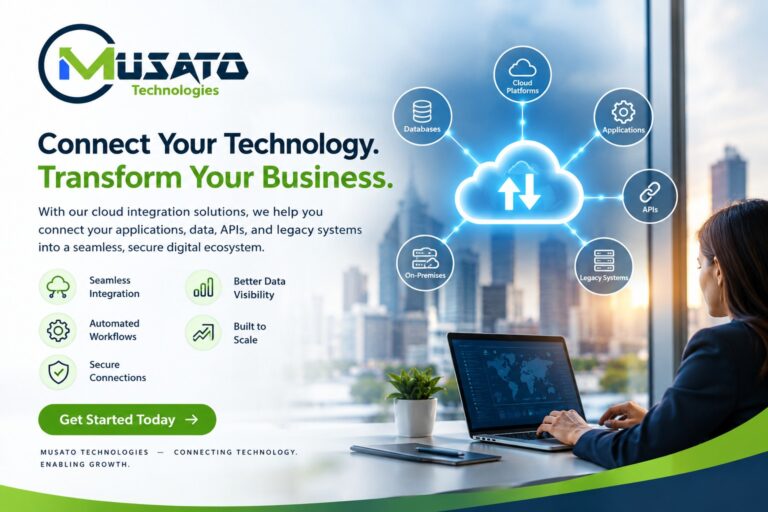
Cloud and platform enablement is the structured approach we use to help organizations adopt, operate, and scale cloud technologies and internal platforms effectively. Rather than treating cloud migration as a one-time infrastructure project, we establish the capabilities, standards, automation, governance, and engineering practices required to make cloud adoption sustainable.
Modern organizations increasingly rely on public, private, and hybrid cloud environments to deliver applications, manage data, support analytics, and respond rapidly to changing business requirements. However, simply moving workloads into the cloud does not automatically produce agility or efficiency. Without a strong platform foundation, cloud environments can become fragmented, expensive, difficult to govern, and challenging for engineering teams to operate.
Through cloud enablement and platform engineering, we create a consistent environment in which development teams can deploy applications faster while maintaining appropriate levels of security, reliability, compliance, and operational control.
The Role of Cloud Enablement in Digital Transformation
Cloud enablement provides the technical and organizational foundation for broader digital transformation initiatives. We focus on removing barriers that prevent teams from making effective use of cloud capabilities.
A successful enablement strategy typically addresses:
- Cloud architecture and infrastructure
- Infrastructure as code
- Platform engineering
- Developer experience
- DevOps and CI/CD automation
- Cloud security
- Identity and access management
- Observability and monitoring
- Cost management
- Governance and compliance
- Application modernization
- Data and analytics platforms
- Operational resilience
By bringing these capabilities together, we establish a repeatable operating model rather than relying on individual teams to solve the same infrastructure problems independently.
Building a Strong Cloud Platform Foundation
A well-designed cloud platform acts as an internal product for engineering teams. We provide reusable services and standardized capabilities that allow developers to concentrate on application functionality instead of repeatedly designing infrastructure from scratch.
A mature platform may include standardized environments for development, testing, staging, and production. It can also provide automated provisioning, deployment pipelines, secrets management, logging, monitoring, networking, identity integration, and security controls.
The objective is not to impose unnecessary restrictions. Instead, we create paved roads that make the secure and recommended approach the easiest approach.
This model improves consistency across teams while reducing duplicated engineering effort.
Platform Engineering and Developer Experience
Platform engineering has become a central component of modern cloud enablement. We design internal platforms around the needs of application developers, data engineers, security teams, and operations teams.
An effective internal developer platform can provide self-service access to common capabilities such as:
- Application templates
- Cloud infrastructure
- Databases
- Object storage
- Messaging services
- Container environments
- Kubernetes resources
- CI/CD pipelines
- Secrets and certificates
- Monitoring dashboards
- Logging
- Security scanning
- Automated environment creation
Self-service capabilities reduce the amount of manual coordination required between development and infrastructure teams. Developers can obtain approved resources through standardized workflows while platform teams maintain the underlying controls.
The result is a better developer experience, faster delivery, and more predictable operational outcomes.
Infrastructure as Code and Automation
Automation is fundamental to effective cloud platform enablement. We use infrastructure as code (IaC) to define infrastructure through version-controlled configuration rather than relying on manual provisioning.
Infrastructure as code enables organizations to create repeatable environments and establish auditable changes. Infrastructure configurations can be reviewed, tested, approved, and deployed through automated pipelines.
This approach helps us reduce configuration drift and minimize human error. It also makes it easier to reproduce environments consistently across development, testing, and production.
Automation can extend beyond infrastructure provisioning. We can automate:
- Environment creation
- Application deployment
- Security checks
- Policy validation
- Configuration management
- Backup processes
- Scaling
- Monitoring configuration
- Resource lifecycle management
- Disaster recovery procedures
The more repeatable a process becomes, the more effectively it can be standardized and automated.
Cloud Security and Governance
Cloud enablement must incorporate security by design rather than treating security as a final review step.
We establish security controls directly within cloud platforms and deployment workflows. Identity and access management, network segmentation, encryption, secrets management, vulnerability management, logging, and policy enforcement can become integrated components of the platform.
A strong governance model establishes clear rules around:
- Who can access cloud resources
- Which services can be deployed
- How sensitive information is handled
- How environments are separated
- How infrastructure changes are approved
- How security events are monitored
- How compliance requirements are demonstrated
Automated governance is particularly valuable because it allows organizations to apply controls consistently without requiring every development team to interpret policies independently.
Cloud Cost Optimization and FinOps
Cloud scalability introduces an important challenge: consumption can grow rapidly when resources are provisioned without effective financial controls.
Cloud cost optimization and FinOps practices help organizations understand where cloud expenditure originates and how resources are being consumed.
We can introduce mechanisms such as:
- Resource tagging
- Cost allocation
- Budget alerts
- Usage monitoring
- Rightsizing
- Automated resource scheduling
- Reserved capacity analysis
- Workload optimization
- Storage lifecycle policies
- Environment cleanup
- Cost dashboards
The goal is not simply to reduce cloud spending. Effective FinOps balances cost, performance, reliability, and business value.
A platform should make responsible consumption visible and practical for engineering teams.
DevOps and Continuous Delivery
Cloud platform enablement works closely with DevOps principles. We establish automated delivery pipelines that allow teams to move software from source code to production through predictable and controlled processes.
A mature CI/CD platform can incorporate:
- Source-code validation
- Automated testing
- Dependency checks
- Security scanning
- Artifact creation
- Infrastructure validation
- Deployment automation
- Approval controls where required
- Production monitoring
- Automated rollback or recovery mechanisms
This creates a continuous delivery model in which releases become smaller, more frequent, and easier to manage.
Containers and Kubernetes Platform Enablement
Containers provide a consistent packaging model for modern applications, while Kubernetes can provide an orchestration layer for containerized workloads.
However, operating Kubernetes successfully requires significant expertise. We therefore treat Kubernetes platform engineering as a broader capability rather than simply deploying a cluster.
The platform should address cluster lifecycle management, networking, identity, secrets, workload policies, observability, resource management, security, upgrades, and developer workflows.
Standardized deployment patterns allow application teams to consume Kubernetes capabilities without requiring every developer to become a Kubernetes infrastructure specialist.
Observability and Operational Excellence
Cloud platforms require comprehensive observability to support reliable operations.
We integrate metrics, logs, traces, alerts, dashboards, and operational telemetry into the platform so that teams can understand system behavior and respond to incidents efficiently.
Observability enables us to answer critical operational questions:
- Is the application available?
- Is performance deteriorating?
- Which services are affected?
- What changed before the incident?
- Where is latency being introduced?
- Are infrastructure resources saturated?
- Are users experiencing errors?
Effective observability also supports proactive improvement. Historical telemetry can reveal capacity constraints, recurring incidents, inefficient infrastructure, and opportunities for architectural optimization.
Cloud Migration and Application Modernization
Cloud enablement frequently begins with cloud migration, but migration should not always mean moving existing workloads without modification.
We evaluate workloads individually and determine whether they should be:
- Rehosted
- Replatformed
- Refactored
- Repurchased
- Retired
- Retained
For suitable applications, modernization can involve containers, managed services, event-driven architectures, serverless computing, cloud-native databases, or redesigned application components.
A platform foundation allows these modernization initiatives to occur consistently and at scale.
Hybrid and Multi-Cloud Enablement
Many enterprises operate across multiple environments. They may maintain on-premises infrastructure while using several public cloud providers for different workloads.
Hybrid cloud and multi-cloud enablement therefore requires a carefully designed architecture.
We establish consistent approaches to identity, networking, security, observability, deployment, governance, and infrastructure management while recognizing that each cloud provider has different services and capabilities.
The objective should not necessarily be to make every cloud environment identical. Instead, we create a consistent operating model while allowing teams to take advantage of platform-specific strengths.
The Cloud Center of Excellence
A Cloud Center of Excellence (CCoE) can provide the organizational structure required to coordinate cloud adoption.
A CCoE typically brings together representatives from architecture, engineering, security, operations, finance, compliance, and business teams.
Its responsibilities may include:
- Defining cloud standards
- Establishing reference architectures
- Developing governance policies
- Creating reusable platform components
- Supporting migration programs
- Promoting cloud skills
- Monitoring adoption
- Establishing financial controls
- Sharing engineering best practices
As cloud capabilities mature, the CCoE can evolve from a central control function into an enablement organization that helps product teams operate independently.
Measuring Cloud Platform Enablement Success
We measure platform success through outcomes rather than infrastructure volume.
Useful indicators include:
- Deployment frequency
- Lead time for changes
- Change failure rate
- Mean time to recovery
- Developer onboarding time
- Environment provisioning time
- Platform adoption
- Infrastructure automation coverage
- Cloud cost efficiency
- Security compliance
- Availability and reliability
- Developer satisfaction
These metrics provide a more complete view of whether the platform is actually improving engineering productivity and business agility.
A Practical Cloud and Platform Enablement Roadmap
A structured roadmap helps organizations progress without attempting to transform everything simultaneously.
Phase 1: Assess
We begin by assessing the existing cloud estate, infrastructure, applications, security posture, development workflows, operating model, skills, and costs.
Phase 2: Establish the Foundation
We establish core identity, networking, security, infrastructure-as-code, account or subscription structures, observability, and governance capabilities.
Phase 3: Build the Internal Platform
We introduce reusable templates, self-service workflows, deployment automation, standardized environments, and developer-facing platform capabilities.
Phase 4: Modernize and Scale
Once the foundation is stable, we accelerate application modernization, expand automation, optimize cloud consumption, and increase platform adoption.
Phase 5: Continuously Improve
Cloud platforms should evolve continuously. We use operational data, developer feedback, cost information, security findings, and business requirements to prioritize improvements.
The Future of Cloud and Platform Enablement
Cloud enablement is increasingly moving toward platform-as-a-product thinking. Internal platforms are becoming strategic products with defined users, measurable outcomes, service expectations, documentation, and continuous improvement cycles.
Artificial intelligence is also influencing platform engineering. AI-assisted development, automated remediation, intelligent observability, infrastructure recommendations, and natural-language interfaces can simplify increasingly complex cloud environments.
At the same time, organizations are placing greater emphasis on resilience, software supply-chain security, data sovereignty, sustainability, and operational efficiency.
The strongest cloud platforms will therefore be more than collections of infrastructure tools. They will become strategic engineering foundations that connect developer productivity, security, reliability, governance, and business objectives.
Cloud and platform enablement provides the foundation organizations need to turn cloud investment into sustainable engineering capability. By combining platform engineering, automation, security, governance, DevOps, observability, FinOps, and developer experience, we create an environment in which teams can deliver software rapidly without sacrificing operational control.
The most effective approach is not simply to migrate workloads to the cloud. We build a repeatable, secure, automated, developer-friendly platform that makes cloud adoption easier to operate and scale.
When the underlying platform is thoughtfully engineered, development teams spend less time solving infrastructure problems and more time delivering valuable products. Organizations gain greater consistency, faster delivery, stronger security, improved visibility, and a foundation capable of supporting continuous digital transformation. Contact Musato Technologies to learn more about our cloud solutions and services.